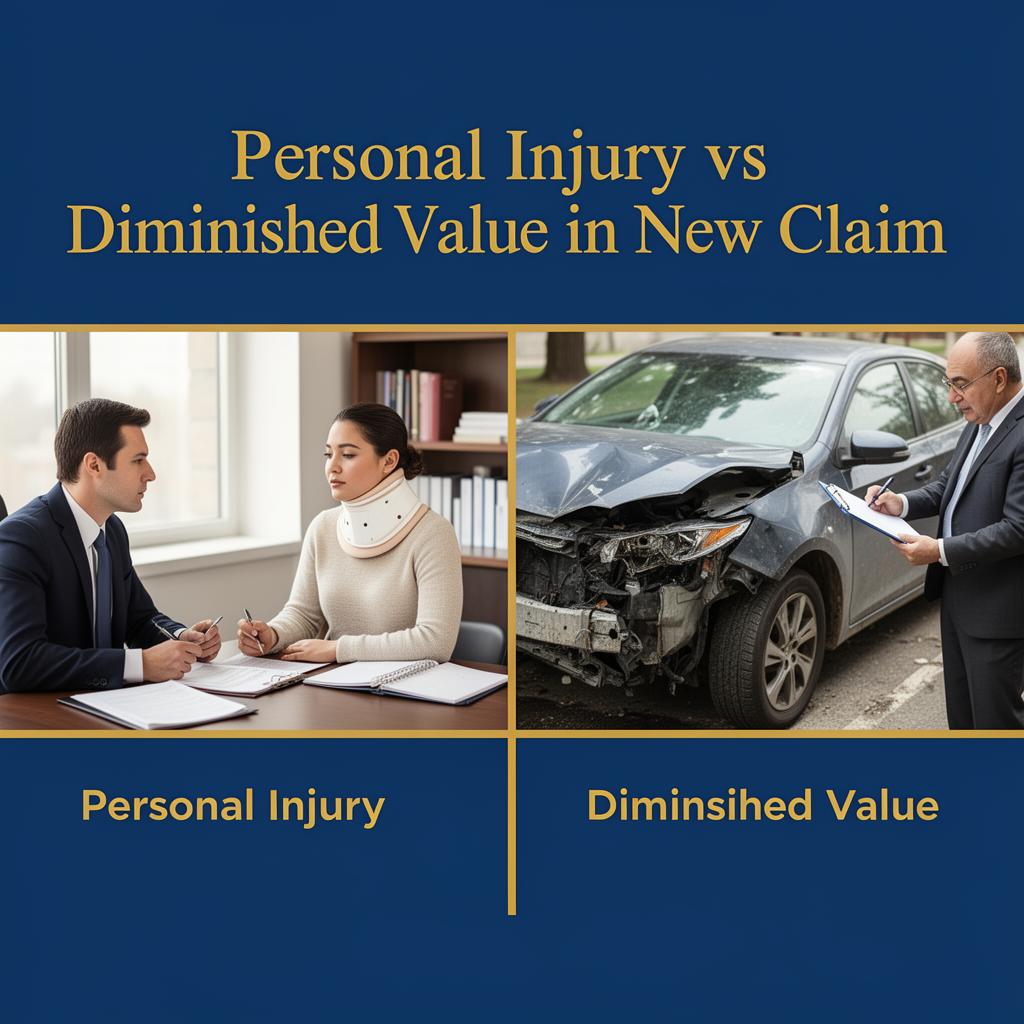
Personal Injury vs. Diminished Value Claims in NJ
📋 Table of Contents
- Introduction: Two Claims, One Accident
- What Is a Personal Injury Claim?
- What Is a Diminished Value Claim?
- Key Differences: PI vs. DV Claims
- Fee Structures: Contingency vs. Upfront
- Timeline Comparison
- New Jersey Legal Framework
- Can You File Both Claims?
- The "Release" Trap to Avoid
- Complete Comparison Chart
- Process Timeline Graphics
- Conclusion: Maximizing Your Recovery
Introduction: Two Claims, One Accident
After a car accident in New Jersey, you may be entitled to compensation for two completely different types of damages: your physical injuries (personal injury claim) and your vehicle's lost value (diminished value claim). While both arise from the same incident, they operate under different legal frameworks, fee structures, timelines, and processes. If you were injured in a car accident in New Jersey, understanding both types of claims is essential to protecting your rights.
Understanding these differences is crucial because many accident victims unknowingly leave money on the table by focusing solely on their personal injury claim. This comprehensive guide will explain how each claim works in New Jersey, what you can expect to pay, and how to maximize your total recovery.
💡 Key Insight
Personal injury covers your body. Diminished value covers your car. You can—and should—pursue both if applicable.
What Is a Personal Injury Claim?
A personal injury (PI) claim seeks compensation for physical and emotional harm you suffered in the accident. In New Jersey, this includes:
- Medical expenses: Hospital bills, surgery, physical therapy, medications
- Lost wages: Time missed from work during recovery
- Pain and suffering: Physical pain and emotional distress
- Loss of enjoyment of life: Inability to participate in activities you previously enjoyed
- Future medical costs: Ongoing treatment needs
New Jersey's No-Fault System
New Jersey operates under a "no-fault" insurance system for medical expenses. Your own Personal Injury Protection (PIP) coverage pays your medical bills regardless of who caused the accident. However, to sue the at-fault driver for pain and suffering, you typically need to meet New Jersey's "verbal threshold" by demonstrating a serious injury.
(Source: NJ Department of Banking and Insurance - Auto Insurance Basics)
What Is a Diminished Value Claim?
A diminished value (DV) claim compensates you for the loss in your vehicle's market value after an accident, even when repairs are completed properly. This is based on a simple reality: buyers pay less for cars with accident histories on their Carfax or AutoCheck reports.
Unlike personal injury, diminished value is a property damage claim—it deals with your vehicle, not your body. In New Jersey, DV claims are fault-based, meaning you file against the at-fault driver's liability insurance.
Types of Diminished Value
- Inherent Diminished Value: The most common type—loss of value due to accident history alone, regardless of repair quality
- Repair-Related Diminished Value: Additional loss if repairs weren't performed to manufacturer standards
- Immediate Diminished Value: The difference between pre-accident value and damaged value (before repairs)
(Source: Financial Services Vehicle Trust v. Panter, 2019 NJ Super. LEXIS 28)
Key Differences: PI vs. DV Claims
Fee Structures: Contingency vs. Upfront
One of the most significant differences between these claims is how you pay for professional help.
Personal Injury: Contingency Fees
Personal injury attorneys in New Jersey work on a contingency fee basis, regulated by N.J. Court Rule 1:21-7. This means:
- No upfront payment: You pay nothing out of pocket to hire a PI attorney
- Fee from settlement: The attorney takes a percentage only if you win
- Court-regulated rates: NJ caps fees at specific tiers