Auto Value Claims LLC operates from 100 Walnut Avenue, Suite 210, in Clark, New Jersey — positioned at the geographic center of Union County. From this location, every municipality in the county is within a 20-minute drive: Westfield is 4 minutes away, Cranford borders Clark directly, and Elizabeth is 12 minutes via the Garden State Parkway.
This isn't incidental — it's strategic. Union County's road network makes it one of the most accident-prone counties in New Jersey. The convergence of Route 22, the Garden State Parkway, I-78, and Routes 1&9 creates daily collision conditions that generate a constant flow of diminished value claims. Being headquartered here means our appraisals are grounded in the same market where your vehicle was damaged, insured, and will ultimately be resold or traded.
For NJ statewide coverage and legal framework details, see our New Jersey diminished value claim guide.
Diminished Value Claims in Union County, New Jersey
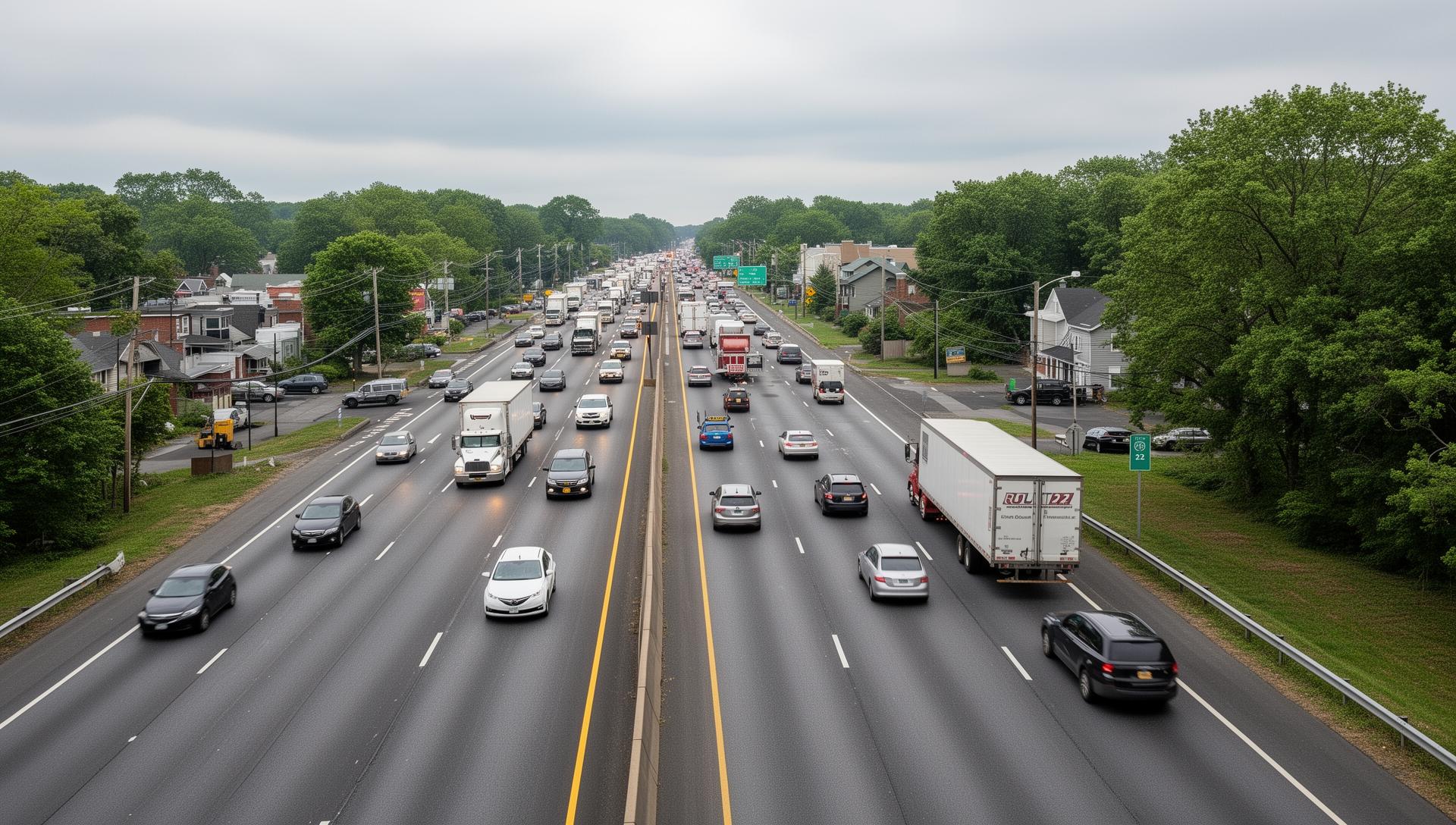
Union County NJ DOT crash data shows these corridors generate the highest concentration of collision-related diminished value claims:
Route 22 (Union Township → Springfield → Mountainside)
The county's busiest commercial corridor. Frequent rear-end collisions at signalized intersections and parking lot exits. High concentration of body shops along this strip reflects the volume.
Garden State Parkway (Exit 135–140)
Merge conflicts at Clark, Cranford, and Kenilworth interchanges. Speed differentials between local and express lanes cause side-impact and sideswipe collisions.
I-78 (Hillside → Union Township → Springfield)
East-west commuter artery connecting Union County to Newark and NYC. Morning and evening rush-hour congestion produces chain-reaction collisions.
Routes 1 & 9 (Elizabeth → Linden)
Commercial truck traffic mixed with passenger vehicles near the Elizabeth Seaport. High-speed rear-end and lane-change accidents are common.
North & South Avenue (Westfield → Cranford → Garwood)
Local arterials connecting downtown areas. Intersection collisions at Central Ave, Elm St, and North Ave crossings.
Free Diminished Value Estimate — Union County Residents
If your accident occurred anywhere in Union County — from the Route 22 corridor to the GSP exits to residential neighborhoods in Westfield, Cranford, or Summit — you may be entitled to recover thousands in lost vehicle value.
Our free preliminary estimate gives you a realistic range before you commit to a full appraisal. No pressure, no obligation.
Applies to diminished value cases for not-at-fault vehicle owners only.
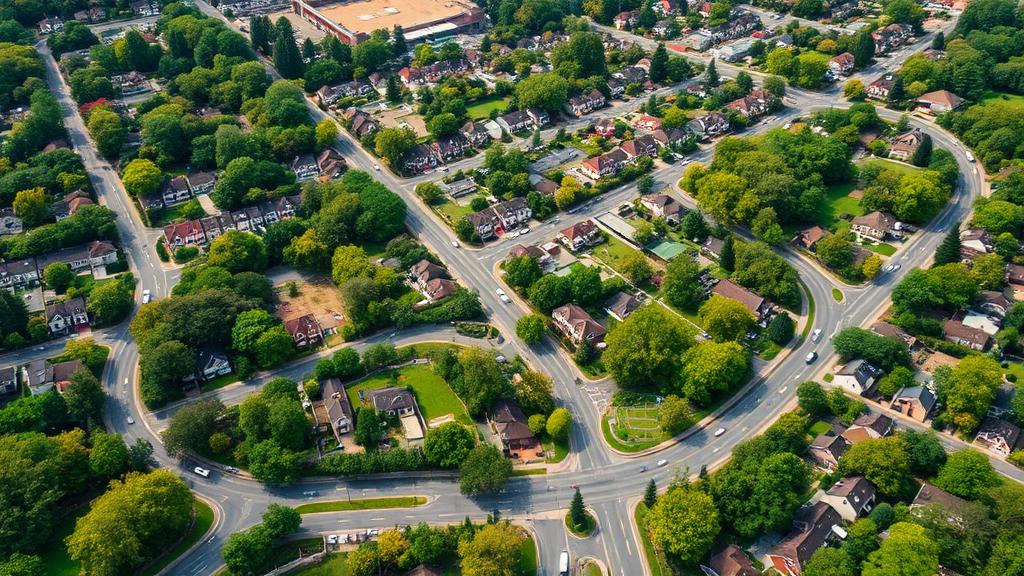
Serving All 21 Union County Municipalities From Clark
From our Clark headquarters, every Union County town is within our immediate service area. We know the local dealerships, the traffic patterns, and the resale conditions that affect vehicle values here:
Union County Market Expertise — Why Local Knowledge Matters
A diminished value appraisal is only as strong as the market data behind it. Generic national databases miss the pricing nuances that define the Union County vehicle market:
High-income ZIP codes in Westfield (07090), Summit (07901), and Scotch Plains (07076)
Concentration of luxury and late-model vehicles means higher pre-accident values and larger diminished value losses.
Elizabeth and Linden serve as regional commercial hubs
Fleet vehicles, work trucks, and high-mileage commuter cars have different depreciation patterns than residential-area vehicles.
Union County dealership density is among NJ's highest
Multiple competing dealers (BMW of Springfield, Mercedes of Union, JMK Auto Sales) provide rich comparable sales data for accurate valuations.
GSP and I-78 funnel Northern NJ buyers through Union County
Regional resale patterns reflect both local and broader Northern NJ market conditions — our appraisals capture both.
Union County Case Study — Route 22 Rear-End Collision
2022 Mercedes-Benz E-Class — Struck at Route 22 Intersection, Springfield
A Union Township commuter's 2022 E-Class was rear-ended at a Route 22 traffic light near Springfield Avenue. The owner was completely stationary — zero fault. Repairs totaled
Post-repair trade-in quotes from three Union County Mercedes dealerships came in $3,500–$5,000 below comparable E-Class sedans without accident history. The permanent CARFAX record was the sole differentiator.
Repair Cost
Collision Location
Route 22, Springfield
Estimated Diminished Value
$3,500 – $5,000
* Illustrative example based on Union County market conditions. Individual results vary.
How We Build Your Union County Appraisal Report
Note: Auto Value Claims provides independent appraisal documentation only. We do not represent vehicle owners in negotiations or provide legal counsel.
What Union County Vehicle Owners Hear From Insurance Companies
Insurers handling Union County claims frequently deploy these responses — and our appraisals are designed to address each one:
"Your vehicle was restored to pre-loss condition."
Repair quality and market value are separate concepts. A vehicle can be perfectly repaired yet permanently devalued because buyers — and dealerships along Route 22 and in Westfield — pay less for vehicles with CARFAX-reported accidents.
"We calculated your diminished value at $800 using the 17c formula."
The 17c formula was created for a Georgia court case and applies arbitrary caps of 10–25% that ignore Union County market realities. Our appraisals use actual NJ comparable sales to produce defensible valuations.
"NJ doesn't recognize diminished value claims."
Incorrect. New Jersey recognizes diminished value as part of third-party property damage claims under fault-based liability. The 6-year statute of limitations under N.J.S.A. 2A:14-1 specifically covers this category of loss.
Diminished Value: Quick Answers
What is diminished value?
Diminished value is the measurable loss in your vehicle's market worth after it has been in an accident — even after full, professional repairs. Buyers and dealerships pay less for cars with accident history on CARFAX or AutoCheck. This gap between pre-accident and post-repair value is what a diminished value claim seeks to recover from the at-fault party's insurer.
What is a diminished value appraisal?
A diminished value appraisal is a certified, independent report that documents how much market value your vehicle lost due to its accident history. Prepared by a certified appraiser using comparable sales data, damage severity analysis, and USPAP-compliant methodology, the report serves as evidence for insurance claims, negotiations, or legal proceedings.
Do I need an attorney for a diminished value claim?
In most cases, no. Many vehicle owners successfully recover diminished value by submitting a certified appraisal report directly to the at-fault driver's insurance company. However, if the insurer denies your claim or significantly undervalues it, consulting an attorney experienced in property damage claims can help. We offer free attorney referrals if needed.
How long does a diminished value claim take?
The appraisal report is typically completed within 3–5 business days. After submission, insurance companies generally respond within 30–60 days. Simple claims may settle in 4–8 weeks total. Claims involving disputes, arbitration, or litigation can take several months. Starting early and submitting a professional report speeds up the process significantly.
Will my insurance go up if I file a diminished value claim?
No. A diminished value claim is filed against the at-fault driver's insurance — not your own. Since you are the not-at-fault party making a third-party property damage claim, filing for diminished value should not affect your own insurance premiums. Your own policy is not involved in the claim.
What is BOCAA certification?
BOCAA (Bureau of Certified Auto Appraisers) is a nationally recognized credentialing body for independent auto appraisers. A BOCAA-certified appraiser has completed rigorous training in vehicle valuation methodology, ethics, and report documentation. BOCAA certification ensures the appraiser's work meets professional standards accepted by insurers, courts, and arbitration panels. Both of our appraisers hold active BOCAA certifications — learn more about our team.
Three Types of Diminished Value
Inherent Diminished Value
The most common and widely recognized type. Inherent diminished value is the loss in market value that occurs simply because the vehicle now has an accident on its history report — regardless of how well it was repaired. Buyers inherently distrust vehicles with reported collisions, and this stigma permanently reduces what the car is worth on the open market. This is the type most diminished value claims are based on.
Repair-Related Diminished Value
This type of diminished value arises when repairs fail to fully restore the vehicle to its pre-accident condition. Examples include mismatched paint, uneven panel gaps, improperly aligned body components, or aftermarket parts used instead of OEM replacements. Even when the vehicle is technically "repaired," these deficiencies further reduce its value beyond the inherent stigma of the accident itself.
Immediate Diminished Value
Immediate diminished value represents the difference between the vehicle's pre-accident value and its worth immediately after the collision — before any repairs have been made. This is essentially the "as-is" damage value. While rarely used in insurance claims (since repairs are typically covered separately), it is sometimes relevant in total loss disputes or when the owner chooses not to repair the vehicle.
How Insurance Companies Estimate Diminished Value (The "17c Formula")
Many insurance companies use a calculation method commonly known as the "17c formula" (named after a Georgia court case) to estimate diminished value. While this formula is widely used as a starting point, it consistently undervalues claims because it applies arbitrary caps and multipliers rather than actual market data.
How the 17c Formula Works (Step-by-Step)
- 1
Start with NADA retail value
Look up the vehicle's pre-accident retail value using NADA guides.
- 2
Apply a 10% cap
Multiply the NADA value by 10% to get the maximum possible diminished value. This arbitrary cap is one of the formula's biggest limitations.
- 3
Apply a damage severity multiplier (0.00–1.00)
The insurer assigns a multiplier based on damage severity — often significantly lower than warranted, further reducing the payout.
- 4
Apply a mileage multiplier (0.00–1.00)
A second multiplier is applied based on mileage, which often penalizes vehicles unfairly even when they hold strong market value.
- 5
Calculate the estimate
Final estimate = NADA value × 10% × damage multiplier × mileage multiplier. The result is typically far below the vehicle's actual market loss.
This Is Not Our Appraisal Method
Auto Value Claims does not use the 17c formula. Our appraisals are built on market-based comparable analysis — we research actual sales data from your local market to determine what comparable vehicles with and without accident history are selling for. The difference is your vehicle's true diminished value.
Our reports are BOCAA-certified and USPAP-compliant, designed to withstand insurance company scrutiny, arbitration, and court proceedings. View our services & pricing or start your claim.
Educational purposes only. The 17c formula explanation above is provided for informational purposes to help vehicle owners understand how insurance companies may calculate diminished value. It does not constitute legal or appraisal advice.
Actual diminished value depends on vehicle specifics, damage severity, local market conditions, and other factors. For an accurate assessment, obtain a professional appraisal from a certified appraiser.
Resources for Union County Vehicle Owners
NJ Diminished Value Guide
NJ law, 6-year statute, fault system, and statewide filing process.
Westfield DV Appraisal
Luxury vehicle focus — 4 minutes from our Clark office.
Elizabeth DV Appraisal
High-traffic Routes 1&9 corridor — commercial and residential claims.
Services & Pricing
Transparent pricing for DV appraisals, damage estimates, and total loss valuations.
Your Vehicle Lost Value on Union County Roads — We Document It
From our Clark headquarters, we produce BOCAA-certified appraisals grounded in local Union County market data. Not guesswork. Not formulas. Real comparable sales evidence.
No obligation. No upfront cost.